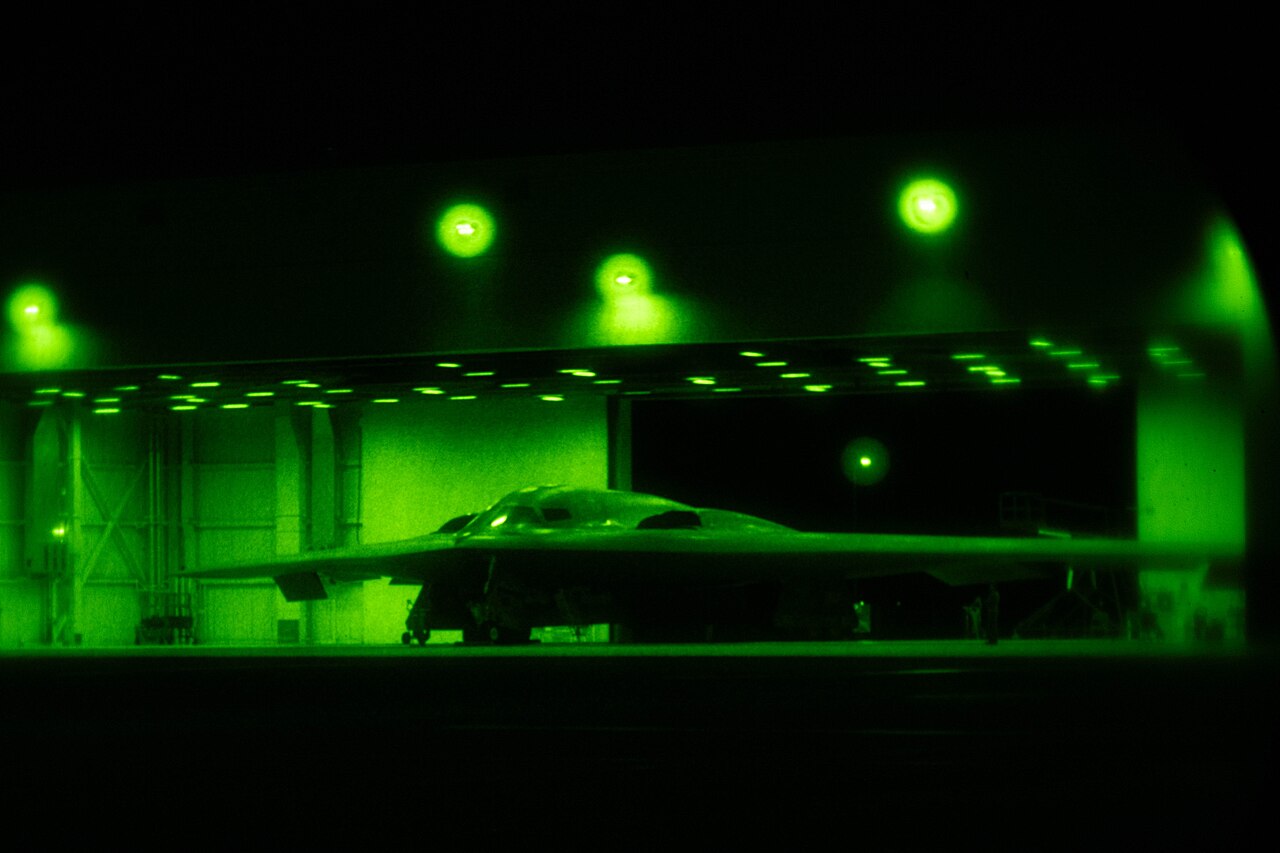
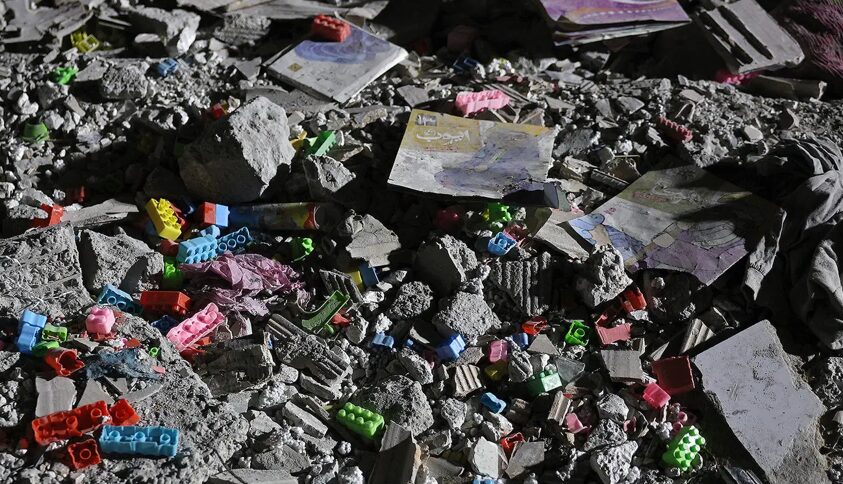
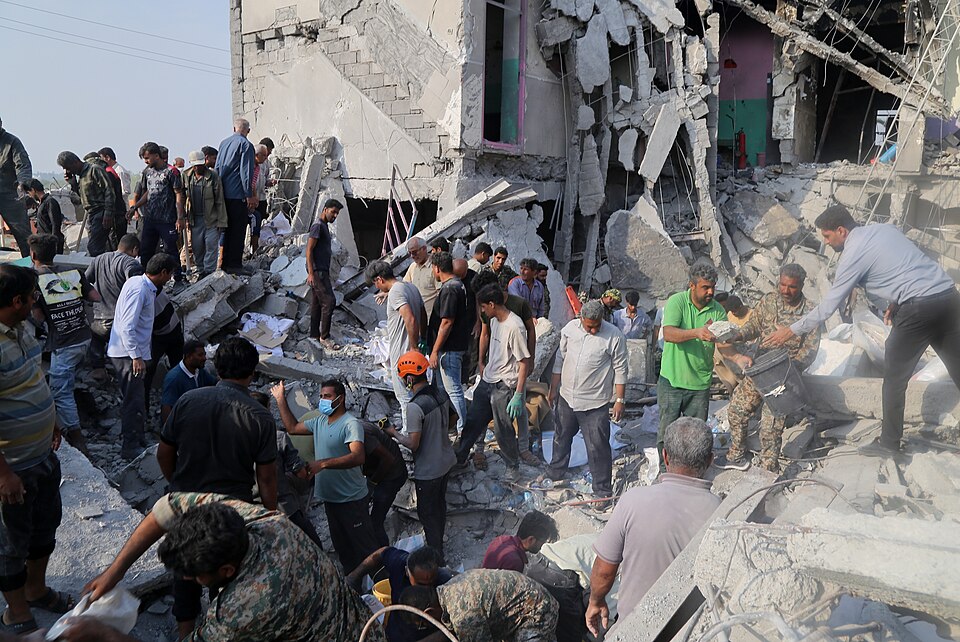
Under the guise of false propaganda regarding regional security and even the liberation of the masses in Iran, the nuclear powers of the US and Israel, led by Trump and Netanyahu, launched an attack against Iran on 28 February with the roar of ‘regime change’, marking another catastrophic chapter in the generalised war crisis that has continued relentlessly for almost three years. Alongside sowing immense death and destruction in Iran and the region, the imperialist offensive ignited the most severe fossil energy shock the global economy has seen in decades, disrupted supply chains, and translated into a prolonged, across-the-board attack on the living conditions of billions of people worldwide.
On 8 July, as Trump, during the NATO summit in Ankara, resorted to muscle-flexing with a declaration of a return to bombings in Iran and the cancellation of the ‘peace process’, the IMF published a periodic update report, in which it downgraded the global growth forecast to 3%, under the impact of the war. The report flagged the developments in our region as a leading risk factor currently for the global economy. According to the report, investments in technological sectors related to AI softened the negative economic impacts of the war crisis. However, the crisis in the Gulf has yet to end and it is still too early to summarise its effects. The announcement of the end of the ceasefire, the waves of US strikes in Iran, and the renewal of the naval blockade in the strait led to an increase of nearly 20% in the price of oil within ten days (as of 15 July). Simultaneously, the technological shock resulting from the implementation of AI tools in various sectors of the economy also entails a wave of professional job cuts due to automation and uncertainty regarding the long-term profitability potential of those investments. Meanwhile, the pressures on the global economy towards a stagflation crisis remain high.
The logic of Trumpism, which strives to extort ‘deals’ through a more aggressive political, economic, and military approach to fortify the destabilised hegemony of the US ruling class in the global system, gambled on the war in Iran as an opportunity. Yet the demonstration of military might turned into a demonstration of weakness. The US and Israeli governments failed to achieve the strategic objectives they set for themselves.
In the asymmetrical balance of forces in the war, the regime in Tehran was indeed never in a position to inflict a fundamental defeat on the US and the State of Israel, but it did inflict a resounding political and geostrategic defeat. It has emerged from the offensive thus far more tempered and assertive. It even illustrated that the ‘axis of resistance’ alliance, which suffered heavy military blows, is still a factor to be reckoned with in the dynamic of the regional confrontation, with the demand that a ceasefire arrangement include Lebanon, for the first time with the launching of missiles from Iran towards Israel in response to Israeli aggression in Lebanon — the ‘unity of the fronts’ — and with the threat hovering in the background to renew the selective naval blockade in the Bab al-Mandab Strait.
The imperialist pretence of standing alongside the revolutionary aspirations of the anti-regime masses in Iran, following the wave of uprisings by millions across all the country’s provinces in early 2026, backfired on the attacking powers with the mounting anger among the masses in Iran over the devastation and the cynical promises of aid in liberation, and even with the strengthening of a sentiment of national unity, alongside and despite the revulsion towards the regime in Tehran. The recent publications regarding the failed plan of Netanyahu and the Mossad to ostensibly ‘crown’ former Iranian president Ahmadinejad, the nemesis of the regime’s opponents, will only add to the fury.
The regime in Tehran managed to exploit the state of emergency to consolidate anew, albeit temporarily, the relatively significant support base upon which it relies, with millions in shows of support — and in the funeral procession of the ruler assassinated by the Israeli government, Ayatollah Ali Khamenei. Alongside this, the acceleration of political executions to a record pace — whilst heroic hunger strikes by prisoners continue in dozens of prisons in the background — testifies to the continued existence of pockets of resistance within Iranian society that could develop further.
The power struggle among the various factions within the regime surrounding the strategic line required, from their perspective, to defend the capitalist theocracy — founded by Khomeini’s historic counter-revolution — against US imperialism reveals to what extent even the completely tentative and unstable diplomatic moves made towards the Trump administration, led by the ‘pragmatic’ faction of President Pezeshkian, are controversial. The weight of the conservative-hawkish faction and the ‘Revolutionary Guards’ (Pasdaran) arm in the regime’s power structure has intensified, and it is evident that even if — with a large question mark — a ‘final’ agreement is signed with Washington, the primary trend in Tehran will be a determination to rehabilitate forces and improve systemic readiness for the next round of military confrontation. There will be no golden age in relations between the ayatollahs’ regime and Washington.
That is to say, even if Trump succeeds through capricious zigzags between bombings and negotiations to achieve what he dubs a ‘peace agreement’, it will not be a stabilising periodic arrangement for the parties in the style of the 2015 nuclear deal. The agreement signed during the Obama era was violated by Trump in 2018 and replaced with a failed policy of economic ‘maximum pressure’, which particularly struck the living conditions of the masses in Iran. Back then, China, Russia, and the European powers were also partners in the deal, and a detailed inspection mechanism was agreed upon, which was a substantial concession on Tehran’s part ‘in exchange’ for the lifting of economic sanctions. The new framework agreement signed with the mediation of Pakistan, Qatar, Turkey, Saudi Arabia, and Egypt — insofar as it is still relevant — is nothing but a miniature, tentative, and unstable farce version of an as-yet unsuccessful attempt to open Hormuz as part of a new arrangement between Washington and Tehran, with the latter receiving more active backing today from Beijing and Moscow.
Once again it was illustrated that US imperialism is the force with the most destructive reactionary influence on a global level. Simultaneously, Netanyahu’s capitalist government of death remains at this time the most dangerous and destructive force on a regional level. On 8 April, hours after Trump issued the first declaration of a ‘ceasefire’, the Netanyahu government launched a massive military offensive on Lebanon, which began with a concentrated act of state terror of bombings on a scale unseen since 1982. The move continued to the expansion of the direct military occupation, and the deepening of the mass displacement of the population and the systematic destruction of settlements. The provisional and unstable framework agreement between Washington and Tehran from 17 June, and its counterpart signed under Washington’s pressure on 26 June between the governments of Israel and Lebanon, remain provisional ‘de-escalation’ arrangements.
In Lebanon, the arrangement does not even entail any tangible commitment to the withdrawal of the Israeli occupation forces, fuels polarisation in Lebanese society, and could ultimately even reignite a civil war along ethnic lines. In the words of Minister of War Katz: ‘We have no territorial ambitions in Lebanon, but until Hezbollah is disarmed — we will not retreat a single millimetre’, barring two ‘pilot’ areas as part of the attempt to force a shift in the balance of forces south of the Litani, as also emerges in the ‘secret’ annex to the agreement. The Netanyahu regime, moments before the Knesset elections scheduled for October, continues to cling to the hopeless pursuit of a picture of ‘total victory’, which it has been promising since October ’23, and to implement a doctrine of entrenchment through the concept of ‘buffer zones’. Namely, a territorial expansion of the military occupation within the territories of Lebanon and Syria, concurrently with seizing opportunities to deepen the areas of direct military occupation in the Gaza Strip, and the acceleration of the colonial takeover and ethnic cleansing operations within the territories of the West Bank — including in the enclaves of the Palestinian Authority.
The Limits of Power of the World’s Strongest Superpower
After the previous attack on Iran in June 2025, which culminated in the dropping of the most powerful non-nuclear weapon currently in existence, failed to realise the declarations of Trump and Netanyahu regarding the degradation of the Tehran regime’s strategic capabilities, its weakening, and the advancement of its overthrow, the sequel was designed to ‘finish the job’. This stemmed from the illusion that widespread military strikes and assassinations within the top echelons of the government and the military wings would lead to paralysis, and ostensibly even to intervention by the anti-regime masses in Iran. Under these circumstances, either the central regime would supposedly collapse and be replaced by a new government amenable to Washington, or the upheaval within the regime’s power structure would lead to a deal being struck between flexible elements within it and Washington, which would fundamentally embody a capitulation to the authority of US imperialism.
Trump’s failed gamble on the recent attack only accentuated the limits of power of the world’s strongest imperialist superpower, which failed in its attempt to change the regime in Tehran or force it with firepower to accept dictates to relinquish strategic assets within the framework of a surrender agreement. Five months since the offensive began, not only has a ‘final’ ceasefire agreement not been signed, but the exchanges of fire are escalating, combined with the reinstatement of the US military’s naval siege on Iran’s ports and Tehran’s blocking of Hormuz, and the potential for a renewal of all-out war remains on the table.
Trump’s retreat from the wave of bombings and the threats of regime change and ‘total’ submission, and even of destroying civilisation in Iran, to the declaration of a ‘ceasefire’ in April, was done from a desperate position, and has thus far failed to restore the status quo in the Strait of Hormuz — the global fuel terminal, which has been effectively blocked since the offensive began and continues to terrorise the global economy. The naval blockade imposed by the US military, in an attempt to extricate itself from the entanglement through increased pressure on a track circumventing a full-scale military attack, did not lead to Tehran folding, and the ‘memorandum of understanding’ in June culminated in an agreement to hold negotiations on a ceasefire agreement within two months. Almost from the very first moment, the negotiations registered exchanges of military blows, with desperate threats from Trump to ‘finish the job’ so that ‘Iran will cease to exist’.
In the context of the economic impacts, it should be noted that in the first 5 months of the war, the surge in oil prices did not surpass the peak that accompanied the invasion of Ukraine in 2022. The price hike was halted after reaching the level of 125 dollars per barrel, influenced by several factors:
- A sharp reduction in oil imports to China, by a rate of over 40% to the lowest level in a decade, alleviated pressures on global energy markets.
- An increase in US oil output alongside an unprecedented coordinated release of hundreds of millions of barrels of oil from the emergency reserves of the US administration, as well as a series of other countries (a coordinated move via the International Energy Agency) in Asia and Europe.
- The implementation of a series of emergency measures to curb energy demand in dozens of countries — particularly in Asia and the Middle East — including restrictions on fuelling private vehicles, the early evening closure of businesses, the transition to working from home, the shortening of the working week in the public sector, and the cancellation of classes in schools and universities.
- A reduction in energy demand as a result of ongoing trends of slowdown in the global economy, including in the Chinese economy, which is registering its lowest growth rate since the end of the pandemic in 2022.
The de-escalation in June also brought about a curbing of the price hike, but even without a widespread military conflagration, the negative impacts on the global energy market will be felt for months and more. These are expected to significantly worsen as the renewed military escalation expands, including with the declaration by the Ḥouthi forces regarding the imposition of a blockade on Saudi Arabia’s seaports, at a time when the depletion of oil reserves in storage limits the room for manoeuvre of governments to once again take emergency measures of releasing oil into the economy to lower prices.
At the G7 summit in France, moments before the signing of the ‘memorandum of understanding’, Trump admitted that the fear of a scenario of a new economic depression and resultant social outrage — what he termed another Herbert Hoover presidency — due to Tehran’s leverage in Hormuz, pushed him to try to end the war. Trump’s resentment from the beginning of the offensive that the rest of the NATO members, and primarily the European powers, refrained from providing direct assistance to the US war machine illustrates in itself a weakened position in international relations. The crisis served as a catalyst for global and regional processes on the economic and geopolitical levels, and brought back to the fore the deepening rifts within the camp of Western imperialism, which continues to exist under the influence of structural dependence on the US and given a not-inconsiderable overlap of interests in the inter-imperialist power struggles against China and Russia.
The frivolity with which the US imperialist system stumbled into wallowing in the Hormuz entanglement is a product of the trampling of internal ‘checks and balances’ in the institution of the presidency, whose Bonapartist characteristics Trumpism has amplified. While Trumpism fundamentally strives to rescue American capitalism from the prolonged, multi-dimensional crisis that birthed it, it only exacerbates systemic contradictions. For the first time in the modern history of the US, from its very first day, the war lacked broad public support domestically, and as it became clear that Trump had no capacity for a ‘one and done’ decisive victory up his sleeve, the division within the MAGA Trumpist movement and his circle of advisors also deepened.
Trump’s right-wing populism promised the end of wars and the extraction, in particular, of the US working class from the pressures of the cost of living and job losses, so the attack on Iran accelerated the disillusionment of some of the strata that were swept up into voting for Trump in 2024, amidst a class revulsion towards the conservative elitist campaign of the Biden–Harris administration. With an intensifying polarisation in US society in the background, which also found expression in a sustained nadir in public support for Trump and the mobilisation of millions in the shadow of the war in Iran for the numerically largest day of protests in US history in late March, concern is also growing within Trump’s orbit regarding the upcoming midterm elections in November.
The framework agreement signed in June does not rule out in advance that a tax on maritime traffic in Hormuz will be imposed for the first time if and when a permanent agreement is signed, effectively as an expression of the strengthening of Tehran’s grip on the strait, which continues to advance, in cooperation with the Sultanate of Oman, the imposition of new ‘service fees’ despite US opposition. Trump’s capricious threat that the US will begin collecting a 20% toll on the passage of goods in the strait drew a barb from Foreign Minister ʿAbbas Araghchi: ‘20% is of course too much. We will be fairer’.
Close to the time of signing, Trump also expressed a general retreat from the declarations that accompanied the opening of the war. Thus, he claimed that he does not ‘believe in regime change’, meaning, in one carried out through imperialist military intervention, and in the same breath claimed that the assassinations at the top had anyway led to a de facto regime change. He insisted that Iran has the right to develop ballistic missiles as its neighbours do — the issue was dropped from the framework agreement.
A general phrasing according to which Iran will not produce or acquire nuclear weapons was almost a copy-paste from the text of the 2015 nuclear deal. Trump clarified that he does not attach importance to enforcement mechanisms in the agreement and that if a final agreement is not reached in August or if there are supposedly violations on the nuclear issue, the US military will return to a widespread attack in Iran — ‘What am I going to say… “Let me sue you”? No, we’re going to bomb the hell out of them if they violate the agreement’. That is to say, a desperate return out of considerations of prestige straight back to the point from which he tried to extricate himself via the agreement route. Even regarding the stockpiles of weapons-grade enriched uranium remaining in Tehran’s possession, Trump’s remarks culminated in impotence.
Regional Implications
Trump’s Orwellian rhetoric, and from time to time echoed by Netanyahu, regarding the promotion of ‘peace’ through military aggression and diplomatic deals indeed reflects a pipe dream of extorting political agreements based on subservience to the regional dominance of the US and Israel. In reality, Trump could not fulfill his promise to swiftly end the wars in Gaza and the region — as in Ukraine. Not only does the bloodbath continue to rage at varying intensity across the various theatres, but Trump’s attempts since his return to the White House to restart the Israeli–Arab ‘normalisation’ process in the region — the dream scenario of the Israeli ruling class — have also come to naught. In a call at the end of May between Trump and Arab rulers, a deafening silence reportedly descended in response to the demand that they join the ‘Abraham Accords’, supposedly if and to the extent that a US–Iran agreement were signed.
The pressure from the mass fury over the war of extermination against the Palestinian people in Gaza is breathing down the necks of rulers across the region, which has witnessed a chain of mass movements and revolutionary crises since the beginning of the previous decade. For this reason, already last year Trump was forced to back down from an attempt to impose a plan for the total displacement of the Palestinian population from Gaza — in fact, a plan hatched within Netanyahu’s capitalist government of death from the very first moment in October ’23, in its ambition to exploit a historical ‘window of opportunity’ to get rid of the Palestinian masses in Gaza by means of ‘transfer’, fundamentally in accordance with the Zionist logic as a whole of national dispossession.
Meanwhile, the latest offensive in Iran added to the tension between the Saudi monarchy and Washington. Despite warnings from bin Salman against becoming entangled, it is plausible that there may be a basis for the denied report that he opportunistically jumped to side behind the scenes with striking Iranian targets. At the beginning of the offensive, Saudi Arabia allowed the US military to use its territory against its own rival, and likewise, it was reported that at the end of March unprecedented strikes were carried out by the Saudi air force against Iranian targets, ostensibly as actions of ‘retaliation’. Yet the bombings were kept at a low profile, ahead of informal understandings on de-escalation even prior to the ceasefire. In doing so, a more cautious approach was taken than that of the Emirates, which aligned itself fully with Trump, as it also did with its dramatic withdrawal from the weakening oil cartels OPEC and OPEC+ for the purpose of flooding the market with more fossil fuels and weakening Saudi dominance in setting oil production policy.
For Riyaḍh, the latest campaign illustrated that US imperialism can also be a broken reed. Reservations grew as it became clear how severely the Iranian counter-offensive was battering the national economies in the Arab Gulf, while the regime in Tehran refused to break under the aerial firepower of the US and Israel. In early May, when Trump pretentiously declared an operation to ‘escort’ vessels in Hormuz without an agreement with Tehran, Riyaḍh made it clear that it would not allow the use of its territory for that purpose, out of fear of renewed military escalation, forcing him to fold the move. The Saudi Foreign Minister’s visit to China reflected once again a walking on a tightrope between the two major world powers, as the process of relative decline in the power of US imperialism, which has generated a ‘multipolar’ dynamic in global relations, urges Washington’s allies to seek options for ‘risk diversification’. Now, Washington has effectively undermined security in the Gulf with ramifications for years to come, after Beijing served as a mediator in the shaping of the regional détente between Saudi Arabia and Iran in 2023. The airstrike attributed to Saudi Arabia at the airport in Sana’a to thwart the landing of a passenger aircraft en route from Iran — for the first time since the start of the ceasefire between the monarchy and the Ḥouthis — did not signal an increase in cooperation between Riyaḍh and Washington, but rather illustrated a drive for a more independent role in the regional system. Meanwhile, Riyaḍh’s provocation brought about, as mentioned, the declaration of a naval blockade on Saudi Arabia by the Ḥouthi forces.
Chinese imperialism seeks to cash in and present itself as a source of stability for global capitalism, despite an ongoing economic slowdown and even though its threat to gamble in the coming years on an invasion of Taiwan hangs like a sword of Damocles over the global economy. The US’s demonstration of weakness in Iran was well noted in both Beijing and Moscow. Trump publicly thanked Xi Jinping and Putin for remaining, in his words, ‘completely neutral’ with regard to the war in Iran. The Sino-Russian imperialist block feared the destabilising consequences of the continuation of the war in Iran and was cautious of becoming entangled in a war in which US imperialism is directly involved. In the first stage of the war, those same powers were forced to watch from the sidelines while their own geostrategic interests suffered blows in Iran — following the Trump administration’s intervention to ‘discipline’ the regime in Venezuela, and the regime change in Syria in favour of a pro-Western regime produced by former Al-Qaeda operatives under Turkish sponsorship. Yet as US imperialism became more entangled in the war, so too grew their self-confidence to issue a challenge, including on the propaganda front. The degree of assistance provided by China and Russia to Tehran was moderate, certainly compared to the Chinese supply of aid to the Russian war machine in Ukraine, but they did not sit idly by, and thus a surge in aid efforts on the economic and military fronts was reported, including ostensibly the supply of dual-use technological components and intelligence used to target US military bases in the region.
The fact that Trump does not jump at the opportunity for propaganda against those moves, but instead rails day and night specifically against his European allies and Canada, in itself speaks volumes about the weakened position of one who promised to restore US imperialism to ‘greatness’. Trump’s visit to Beijing in May marked not only a continuation of détente in the trade war, but also a failure to present any significant achievement. In the background, the policy of economic nationalism in the form of raising tariffs failed to curb Chinese exports, and combined with the trend of depreciation in the value of the dollar, it further fueled the cost-of-living crisis in the US, social rage, and class polarisation.
Symbolically, among NATO member states, Erdoğan is among the heads of state closest to Trump at this stage — bitter news for the ruling classes in the State of Israel and in Greece, and at the same time a reminder of the way US imperialism exploited and sacrificed the Kurds in Syria in recent years to Turkish military aggression and to persecution by the al-Sharaʿa regime operating under Turkish patronage. The growing antagonism on the geopolitical level between Israeli capitalism and its Turkish counterpart is a multi-year process that largely eliminated a historic strategic alliance, and has once again intensified during the recent years of war.
One factor deepening the rift on the surface is the reliance of Erdoğan’s right-wing populism on a false image of solidarity with the Palestinian people, mainly through hollow rhetoric, designed to manipulate the deep solidarity among the masses in Turkey — even though Erdoğan today is even less popular than Trump, and the broad protest movement against him last year represented the tip of the iceberg of social and class rage. Beyond this trend, the rivalry is fueled by the hostility of the Israeli ruling class towards the ‘Muslim Brotherhood axis’ led by Turkey and Qatar, including the sponsorship of Ḥamas, as well as hostility towards the Neo-Ottoman ambitions expressed by the Erdoğan regime, and as a derivative, towards Turkey’s role in the power struggles over fossil fuels in the Eastern Mediterranean, and its role in Syria — including the nurturing of the al-Sharaʿa regime and the building of its military capabilities.
Therefore, as an ‘anti-Turkish’ retaliatory action, at the end of June the Israeli government of death, responsible for the ongoing genocidal assault against the Palestinian people — as part of a process of systematic occupation and dispossession implemented for decades in accordance with the ideological logic of Zionism as a whole — declared that it officially recognises the Armenian Genocide. In doing so, it only proved its treatment of the subject as a bargaining chip, just as in the final analysis it behaves with even greater severity towards the memory of the horrors of the Jewish Holocaust. Currently, the Netanyahu government is occupied with an attempt to thwart or bring about a downgrading of the potential sale deal of F-35s to Turkey. In 2018, Turkey was removed from the production partnership programme due to reliance on Russian military technology at the time, and in 2021 the Emirates withdrew due to refusal to comply with dictates regarding the use of Chinese technology, such that until now the Israeli Air Force remained the sole operator in the region. After Trump expressed willingness to consider promoting a sale to Ankara, Netanyahu publicly came out against the idea, with the statement that Turkey is not a ‘friendly country’ to the US.
‘Super-Sparta’ or a Client State?
The vision of ‘Super-Sparta’ presented by Netanyahu to Israeli capitalism last September, moments before the declaration of a ‘ceasefire’ in Gaza was forced upon him, proposes adaptation to a geostrategic dead end — as he said at the time, Israel is ‘in a kind of isolation, we will have to adapt more and more to an economy with autarkic features’. For Israeli capital, this is a nightmare vision, yet Netanyahu’s rivals within the ruling class struggle to present an alternative strategic vision. Despite disagreements over the conduct of the war, a consensus prevailed within the Israeli ruling class time and again around the main moves of the Netanyahu government in the 1967 territories and the regional arena, because they identified in the Ḥamas attack and massacre of 7 October 2023 an opportunity to deploy unprecedented firepower, and mass horrors, in an attempt to improve the position of the Israeli regime in the regional balance of forces and vis-à-vis the Palestinian masses. They possess no solutions to their own fears regarding the consequences of awakening mass fury in the West and in the US in particular for the State of Israel, as well as the partial divergence of interests vis-à-vis Washington in the regional context.
Trump humiliated the Netanyahu government when he left its demands outside the negotiations with Iran, and when he publicly criticised the scale of the bombings in Lebanon and quipped that it would be better if the al-Sharaʿa regime in Syria ‘does the job’ in the confrontation against Hezbollah — as he put it, ‘If Israel can’t do the job without killing everyone else, Syria will do the job’. The al-Sharaʿa regime was forced to immediately distance itself from the idea, which would be an adventurous gamble even considering the explosive legacy of the Syrian occupation in Lebanon during the days of the Assad regime. During Macron’s visit to Damascus in early July, the French president even pressured al-Sharaʿa not to accede to any request for intervention in Lebanon — which French imperialism considers part of its historical sphere of patronage, derived from the secret colonial Sykes–Picot deal signed with Britain in 1916 for the division of territorial spoils, the details of which were exposed by the Bolshevik leadership in the socialist revolution in Russia. However, it is not Paris but Washington that dictates the tone in Lebanon.
Trump’s capricious statements regarding Israel involuntarily reflected a certain continuity of the pressures that were reflected during the Biden administration around reservations about Netanyahu’s rule as a factor that is insufficiently disciplined, and therefore complicating, from Washington’s standpoint. Trump claimed that Netanyahu ‘knows who’s boss’, and referred exaggeratedly to the State of Israel’s dependence on Washington, and of course on himself: ‘Without the United States, there would be no Israel. And without me, there would be no Israel, because no other president was willing to do what I did’. In the Netanyahu government, they were furious over the ‘memorandum of understanding’ with Iran and over the pressures to limit the Israeli army’s room for manoeuvre. On the other hand, the demand for discipline arrived in the form of a public reprimand from Vice President Vance, who defied that ‘Trump is the only head of state in the entire world who is sympathetic to the nation of Israel at this moment in time, and he happens to be the head of state of the world’s superpower… Over the last three months, two-thirds of the defensive weapons that have protected your homeland have been built by American hands and paid for by American tax dollars’.
The fact that Israeli military exports only soared during the war years and broke an all-time record in 2025 indeed proves that the Israeli regime of occupation is not truly at a high degree of international isolation in the manner of Iran. Furthermore, the US was and remains the decisive enabler of the mass horrors that continue to be perpetrated by the war machine of Israeli capitalism, and this is not a real low point in strategic relations between the sides. The dependence of the State of Israel on US imperialism remains high, but it is not at the level of absolute subordination in the manner of an actual client state. There were in the past, during years of higher dependence on regular subsidies from US imperialism, incidents of significant tension between Republican presidents in the US and Israeli governments, while the Israeli regime was always careful to maintain a measure of independence regarding interests it considers vital. However, from the perspective of the Israeli ruling class, there is growing concern over the implications of increased pressure at the international level, particularly those built under the indirect influence of mass consciousness around the world regarding the Palestinian struggle, and above all, from the unprecedented collapse in public sympathy in the US for aid policy towards the State of Israel, including among Republican Party voters.
Netanyahu’s declaration in January that military budgetary aid from the US should be ended within a decade — just as economic budgetary aid ended in 2008 — was intended to reduce dependence on regular subsidies and render redundant the demand in the US to end this policy. The demand is gaining unprecedented popularity in the US, as part of a broader shift in public opinion following the war of extermination in Gaza and the bloody crisis. The shift in public opinion even dragged a broad symbolic vote by Democratic Party members of Congress in favour of cutting military aid, creating friction with the lobby for the Israeli right, AIPAC. The regular subsidisation has been in a continuous trend of reduction relative to Israeli GDP for decades, but it does not, of course, include the massive influx of subsidised weapons and munitions after 7 October ’23, and the economic costs of US military operations backing the State of Israel in recent years. Likewise, the very reservation of the Israeli regime regarding the sale of advanced stealth aircraft to Turkey illustrates strategic reliance on US imperialism to ensure a qualitative military edge in the regional arena.
From the standpoint of the web of interests of US imperialism, even now the trend is not one of a fundamental weakening of support for Israeli capitalism, as their most stable fulcrum in the regional arena. Consequently, in response to the extensive damage to US military infrastructure across the region during the Iranian counter-attack — which included drone and missile strikes on at least 20 different sites with costs estimated in the billions of dollars — the possibility is currently being considered of partially shifting forces westwards from the Gulf, and specifically reinforcing a long-term military presence in Israel.
Likewise, despite pressure from Washington to curb Israeli military aggression, no real pressure is being exerted for the withdrawal of Israeli occupation forces in Lebanon and Syria, and certainly not from Palestinian territories. Recently, the US administration has also been promoting, through the insertion of clauses into the latest budget bills prior to the midterm elections, a qualitative upgrade of cooperation with Israel in the field of intelligence as well as in research, development, and production of weapon systems for years ahead, without transparency and oversight given the move’s unpopularity.
Long-Term Occupations
In Lebanon and Syria, entrenchment for a long-term occupation is openly being carried out. Within Israeli far-right circles, dedicated organisations have even been established over the past two years, determined to exploit opportunities to promote colonisation in the territories seized in Syria and Lebanon, in the finest tradition of anchoring Zionist territorial claims in biblical interpretation as a pretext for defining the occupied territories as part of the ‘Land of Israel’. At this stage, this aspect does not represent official government policy or aspirations among the ruling class, but these organisations are undeterred by the fact that their chances in the foreseeable future are slim, striving to grow stronger and create facts on the ground under the cover of the military occupation. Meanwhile, the Netanyahu regime has made it clear that it will not accede to al-Sharaʿa’s demands even for a partial withdrawal from the new occupied territories in Syria, blocking the avenue for any meaningful diplomatic deal between the regimes at least until a change of government in the State of Israel.
The Israeli occupation in Syria continues to entrench itself for the long term. To this end, it relies heavily on ethnic ‘divide and rule’ to tighten its grip on the ground, particularly through an effort to portray itself as the defender of the Druze minority — the support they mustered, since the massacre in As-Suwayda in July 2025, even translated into the raising of Israeli flags in this region, a tangible reminder of the danger of fuelling ethnic rifts to the point of a civil war dynamic. This, as mentioned, occurs concurrently with the fuelling of ethnic polarisation in Lebanon, given President ʿAoun’s servile willingness for a strategic rapprochement with the Israeli occupation. Similar to the formal ‘peace agreement’ extorted between the State of Lebanon and the State of Israel in 1983 under the bayonets of occupation at the initiative of the Reagan administration, current attempts to recreate this caricature likewise lack any viable political basis under the polarised circumstances in Lebanon and in light of the mass horrors inflicted by the Israeli government upon the Lebanese and Palestinians.
Despite the vast scale of killing and destruction in Lebanon, accompanied by the displacement of the population from dozens of settlements, at this stage the limits of the occupation’s power and the contradictions in the war propaganda aimed at public opinion in Israel are becoming increasingly exposed. Back in April, it was reported that sources within the Israeli army admit that ‘despite the attempt to market the new security zone as a response for the residents of the north [in Israel]… the zone will not prevent rocket fire, drone infiltrations, or the operation of explosive drones’. While the occupation forces have killed thousands in Lebanon, the fact that, despite sophisticated military technology, dozens of Israeli soldiers have been killed in recent months is bolstering a mass sentiment of scepticism within Israeli society towards war propaganda.
In the process, Netanyahu’s ‘full-on right-wing’ government continues to advance the trend of barbaric, accelerated dispossession of Palestinians in the West Bank and East Jerusalem, accompanied by state terror and the terror of Kahanist–fascist gangs, with the latter not only enjoying an expanded scope of action under state patronage, but serving as a complementary move in the implementation of the dispossession policy. Since 2023, the capitalist occupation government has expelled around 118 Palestinian communities, some of them more than once, promoted the establishment and consolidation of new colonial outposts across the West Bank, extensively developed colonial infrastructure, and expanded the scope of operations into the enclaves of the Palestinian Authority as well. Palestinian demonstrations continue to face military suppression, including live fire, as well as persecution and the abduction of residents for administrative detention.
Concurrently, the creeping expansion of the ‘Yellow Line’ in the Gaza Strip continues as part of deepening takeover, and preparations for the potential renewal of the genocidal offensive at high intensity moments before the Knesset elections. This takes place against the backdrop of an assessment that Trump’s colonial ‘Peace Council’ may soon declare Ḥamas in violation of the agreement and provide the Israeli occupation forces with further room for manoeuvre.
In reality, since the ‘ceasefire’ began in October, over 1,000 (!) people have been killed by the occupation forces. The official, conservative total tally of Palestinian deaths in the Gaza Strip during the genocidal war is estimated so far at at least 73,000 people, 21,000 of whom are under the age of 18, including 5,000 infants and toddlers under the age of 5, some of whom were starved to death by the Israeli government’s starvation policy. The Israeli army now directly controls at least 64% of the Strip, compared to an ostensible 53% at the time the agreement was declared. The period of de-escalation is also accompanied by the continued extensive enforcement of the blockade on the movement of people, commodities, and goods, and not a single one of the hospitals managing to remain operational has returned to full functioning.
Ferment in the Shadow of Mass Horrors
The international solidarity campaign for the release of Hussam Abu Safiya, director of the Kamal Adwan Hospital which the occupation forces destroyed in the north of the Strip, who has been detained for about a year and a half without charge or trial, shines another spotlight on the destruction of health services in the Strip and the mass incarceration of Palestinians, including children, under conditions of abuse and torture. The prominent visibility of Palestinian flags raised by fans of various teams throughout the World Cup in the US, Canada, and Mexico as a sign of solidarity highlighted the significant weight of Gaza and Palestine in mass consciousness on a global level even during the ‘de-escalation’ phase, following the attention drawn by the cowardly piratical takeover of the international solidarity flotilla in mid-May in international waters and the open abuse of protesters by Police Minister Ben-Gvir.
The protest against this persecution and solidarity with Gaza merged once again with the messages of a broad workers’ strike organised in Italy on 18 May, alongside demands against the cost of living and the expansion of military expenditure. The fact that Italian Prime Minister Meloni, the leader of right-wing populism connected to the far right, who was an ally of Netanyahu, began — particularly since September — to pay lip service to the protest against the war of extermination in Gaza, and in April even announced that a security agreement (albeit minor) with the State of Israel would be frozen, reflects the power of the Italian working class and echoes the pressure of mass solidarity against the crimes of the occupation.
In the Gaza Strip, as evidence of an impressive fighting spirit under extreme conditions of existence, groups of residents in various locations held protest vigils throughout the recent period against the aggression of the Israeli occupation in the shadow of the ‘ceasefire’, against preventing patients from leaving the Strip to receive medical treatment, in solidarity with Palestinian women in the occupation’s prisons, against the dismissal without a hearing of dozens of UNRWA workers under pressure from the Israeli regime, and more. A call for a mass day of protest against Ḥamas, under the title ’26 June Revolution’, was met with limited participation, which according to reports was influenced to some degree by measures of threats and persecution on the part of Ḥamas, although it is likely that this was not the main explanation, certainly at a time when the population is exhausted under the relentless attacks of the occupation.
Likewise, a low participation rate was recorded in the exceptional municipal elections in Deir al-Balaḥ in the central Strip at the end of April, alongside a low participation rate in the West Bank as well, which was affected by the brutal conditions imposed by the Israeli occupation. But beyond that, the elections were largely perceived as irrelevant and as a show by the Palestinian Authority in Ramallah, which stipulated, among other things, that a condition for running was expressing recognition of the PLO as the ‘sole legitimate representative of the Palestinian people’ and support for the organisation’s political programme, which officially excluded Ḥamas and other factions. ʿAbbas’s declaration now of elections for the Legislative Council at the end of November, for the first time in 20 years, and ostensibly for the presidency at the beginning of 2027, arrived while retreating from the idea of holding mass elections for the first time for the PLO National Council — a folding under pressure from regimes in the region, which detest the idea of an awakening of political ferment among Palestinians throughout the diaspora. It is reasonable to assume that ʿAbbas’s clique will attempt to manipulate in every way to ensure maximum control over the elections for the Legislative Council and the presidency as well, having already cancelled election proceedings time and again in the past when fearing the results.
Yet the fact that among the circle of Marwan Barghouthi, the Palestinian leader who remains the most popular, it was made clear that he intends to run directly from within the occupation’s prison, signals the potential for the development of a dynamic of awakening new hopes around the idea of a change of leadership within the national movement. Such circumstances, of heightened debate over a leadership change and a shift in agenda for the struggle, could also open up new space for the consolidation and intervention of independent left-wing forces. Included in this are potential steps to advance the building of a socialist left, around a vision and political programme necessary for building the struggle for the national and social liberation of millions of Palestinians, with steps to advance a path of mass action, mass organisation for community defence, including with the assistance of armed struggle under democratic control of the communities, and in challenging the occupation, Zionism, imperialism, and capitalism, as part of a regional and global campaign.
Systemic Deadlock
As an expression of the geostrategic dead end in which the Israeli ruling class is trapped, as mentioned, all Zionist and ultra-Orthodox establishment parties, including the bourgeois ‘opposition’ parties, broadly support the military campaign led by the Netanyahu government in recent years. In fact, establishment parties from the ‘opposition’, as well as the right-wing leadership in the Histadrut General Federation of Labour, provided a lifeline to Netanyahu and the far right time and again on the basis of their mobilisation in support of the war at junctions of regional military escalation and against the Palestinian people. This while Netanyahu’s coalition government was never popular, and its policy incited mass protest movements against it within Israeli society — albeit characterised by a high level of contradictoriness due to the influence of chauvinist capitalist establishment forces.
The leaders of the capitalist opposition parties, among them Lapid and generals Eisenkot and Golan, frequently turn to attacking the government from the right over ‘insufficient’ military aggression, issuing a chorus against the US–Iran framework agreement, while Bennett promises that a ‘change government’ under his leadership will act with a ‘clear strategic plan to collapse the Iranian regime’, and Golan cried out that the agreement ‘wiped out immense military achievements’. The implicit message, that the Israeli government should ignore Trump’s dictates, on the face of it also matched Ben-Gvir’s declaration that ‘the State of Israel is not a banana republic’ (rhetoric employed by Begin vis-à-vis the Reagan administration around the annexation of the Golan Heights). Yet Israeli capital is far more anxious than Ben-Gvir’s party about maintaining strategic relations with the US, even though capital interests also enlist elements of right-wing populism, alongside ‘democratic’ rhetoric, to try to harness support on the basis of public outrage. Despite the criticism of ostensible surrender to Trump’s dictates, it is reasonable to assume that a coalition government of that same bloc would adhere no less, if not more, to coordination and cooperation with the White House.
The Israeli ruling class is divided, but objectively lacks an horizon for a substantively stabilising exit strategy from the ongoing crisis of the 7 October war, such that the bourgeois opposition has no fundamental strategic alternative to the government available, and in the final analysis expresses a general aspiration for a governing coalition that is more flexible in managing the occupation, the wars, and the chain of crises of Israeli capitalism, without the parties of the far right and the ultra-Orthodox right.
Accordingly, these parties also provided support to the doctrine of cultivating new military occupation territories as medium-to-long-term ‘security zones’, despite inconsistent reservations regarding the conduct of the war in the various theatres, the scope of the occupations, and the greater distance of some of them from supporting the plan for ‘Greater Israel’, with its derivatives, in the sense of expanding the territories earmarked as relevant for creeping annexation via colonial settlement. On this basis, they continue to pump out the reactionary campaign for ‘equality in slaughter’, which demands the conscription of missing manpower — ostensibly 12,000 to 15,000 soldiers — for the maintenance of the war and occupation machine, primarily from among the ultra-Orthodox poor. Tension prevails between the capitalist occupation government and the military top brass, as the generals complain of overstretching forces and demand more manpower and budgets. Thus, following government approval during the offensive on Iran for the official recognition and development of dozens more colonial outposts in the West Bank, Chief of Staff Zamir claimed that he is ‘raising 10 red flags… in a short time the IDF will not be prepared for its routine mission’.
Bennett, former CEO of the Yesha Council, who aspires to return to the premiership within the framework of a centre-right coalition, claimed that ‘construction that is illegal or not in Area C or on private land is illegitimate. What is illegal will not be and will be evacuated’. In doing so, he winks, firstly, at circles in the Israeli ruling class who view settler terror as an unwanted excrescence that complicates the army’s work, heightens ferment among the occupied population, and sabotages the State of Israel’s international relations, specifically the Israeli–Arab normalisation process. To this end, he wishes to ‘change the atmosphere’, in his words, to make it possible to alter the mood among the masses in the region: ‘Arab leaders do not wake up in the morning thinking about the Palestinians. None of them really cares. What do Arab leaders care about? Their street’. Secondly, this is also a wink at the masses in the Jewish population who revile the settler gangs. Bennett offers a slightly different mode of managing the occupation to achieve the same goal — deepening ethnic cleansing (‘Judaisation’) of territories and thwarting the establishment of a Palestinian state. This ‘clever’ proposal to return to a policy of colonial occupation that factors in broader systemic interests will not bring about the subjugation of the assertive settler gangs, and simultaneously will also fail in the attempt to bring about the waning of Palestinian, regional, and global resistance to the systematic occupation, dispossession, and oppression of millions of Palestinians.
In light of extensive overlap of interests with the Netanyahu government, one can find in the same breath from those same Zionist capitalist ‘opposition’ parties messages that sometimes challenge ‘forever war’ and even the ‘sacrifice zone’ in southern Lebanon — an appeal to the memory remaining from 18 years of Israeli occupation in southern Lebanon until the year 2000 — alongside messages promoting bombings in Iran and Lebanon, and military takeover of ‘buffer spaces’. Yet Golan and others pretend to ‘leverage’ military aggression into ‘diplomatic agreements’. In what way are agreements they believe only they could achieve supposed to differ from Trump’s agreements? In mere rhetoric and posturing.
The policy of ‘forever war’ expresses a deep crisis in Israeli society, which is also reflected in a general rise in the level of violence in the community, particularly among the Arab-Palestinian population as a result of the impacts of a government policy that is nationally, economically, and socially crushing. The fact that the upcoming elections in Israel will take place without any serious political alternative from the left, as an expression of cross-community national and ethnic interests of the working class, echoes the weakness of the organised left on a global and regional level. The Zionist capitalist establishment parties are partners in widely fuelling support for the logic of the war of extermination against the Palestinian people and in fact of ‘forever war’ in defence of the occupation, the settlements, and the rule of capital, thus fuelling chauvinist views and broad support for more ‘military solutions’ to security concerns among millions of Israeli workers and poor.
Under these circumstances, there is a vital need for a struggle around democratic demands, but the focus of left-wing forces on a narrow number of minimal democratic demands, in narrow defensive struggles, and in a conservative effort to preserve power is nothing short of dangerous short-sightedness, sacrificing the paving of a path to fundamental change. In this there is a relinquishment of the task of building a mass point of reference from the left, which will consistently outline, even through social rifts and class contradictions, steps towards exploiting opportunities for breakthroughs to gain a hearing and harness support and action from strata becoming disillusioned with the promises of security demagogy and Zionist nationalism.
The required alternative to the mass horrors of the occupation and Israeli capitalism under the aegis of US imperialism, also for the purpose of realising basic democratic aspirations, is a socialist, cross-national, class left agenda, to promote a consistent struggle for the resolution of the bloody national-colonial conflict, at the heart of which is the necessity of ensuring the right of the Palestinian people to national independence, freedom, equality, and well-being. Only in the context of a struggle for regional socialist transformation, through liberation from the yoke of the imperialist powers, the dictatorial regimes in the region, the Zionist policy of dispossession, and capitalism, will it be possible to establish regional peace on the basis of an equal right to existence for both peoples between the Jordan River and the sea and for all the peoples of the region. Building forces that systematically advance such a change as a minority view today is a prerequisite for future breakthroughs in building organised socialist forces of change on a broad scale.